Art direction & experience
A website should be felt. The business case for immersive design.
THE SHORT ANSWER
An immersive website gives a business a recognisable atmosphere, a clear story and a confident next step. At AI Web Motion, we use motion to make the brand tangible, while keeping the information and the experience effortless.
Your first impression is already an experience
Before a visitor reads your service list, your website has started a conversation. Its rhythm, images, type and movement suggest how considered your business is. For a salon, a restaurant, a design studio or a premium service, that first impression can carry part of the experience customers are hoping to buy.
A technically complete website can still feel interchangeable. When every business uses the same blocks, the same stock image and the same sales language, the visitor has little to remember. Immersive website design gives a brand its own visual world. It invites attention, then turns that attention toward the details that matter.
Our view at AI Web Motion is simple: the website should express the care behind the business. A beautiful opening earns a moment. The journey that follows has to earn trust.
What makes a website immersive?
Immersion comes from coherence. Art direction, photography, video, typography and interaction feel as though they belong to the same story. A visitor moves from introduction to discovery to decision without feeling that every section has been designed separately.
Full-width imagery can establish scale. A restrained transition can connect a product to its context. A quiet pause can give an important sentence room to land. The experience becomes distinctive because the elements support one another, not because every element is moving.
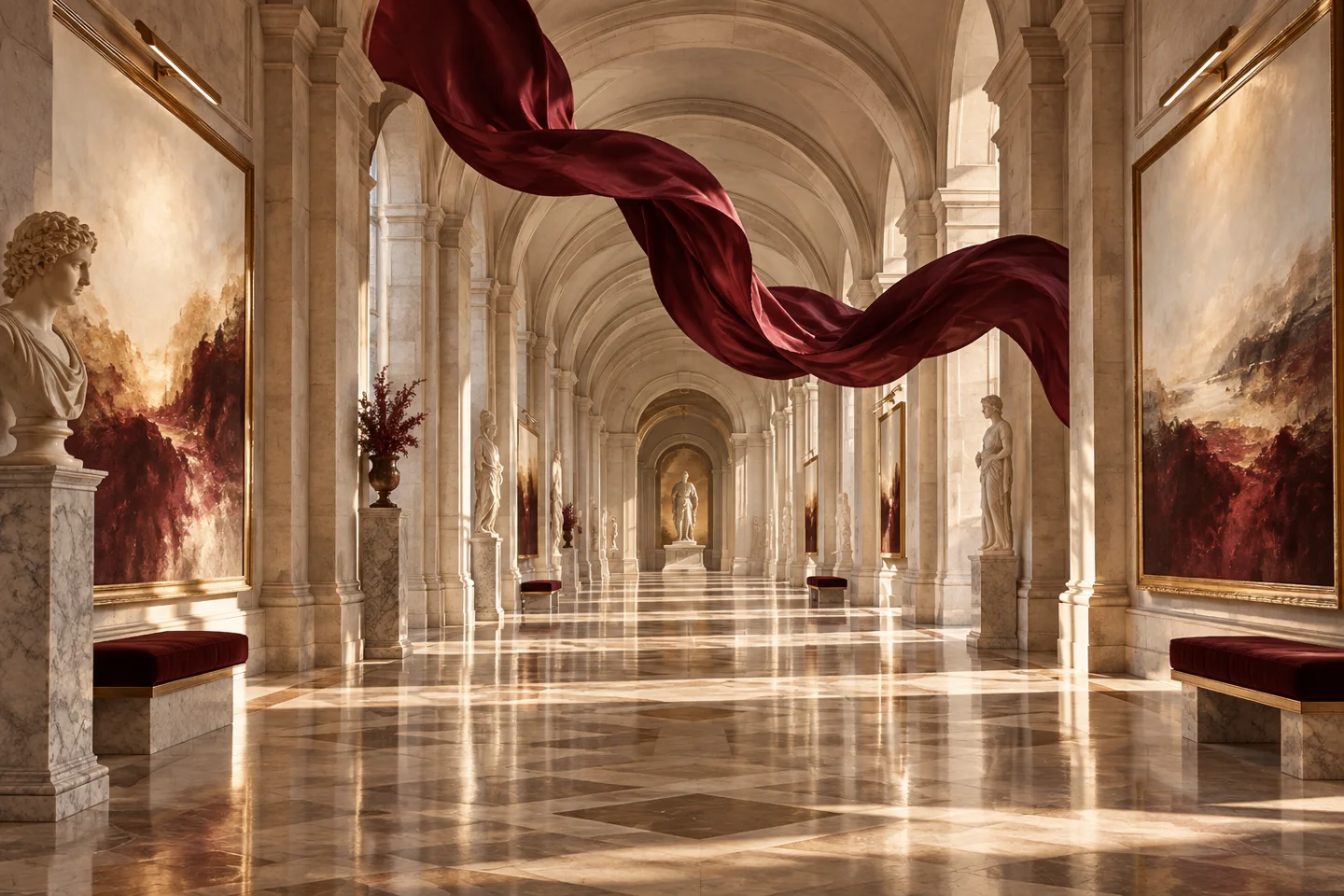
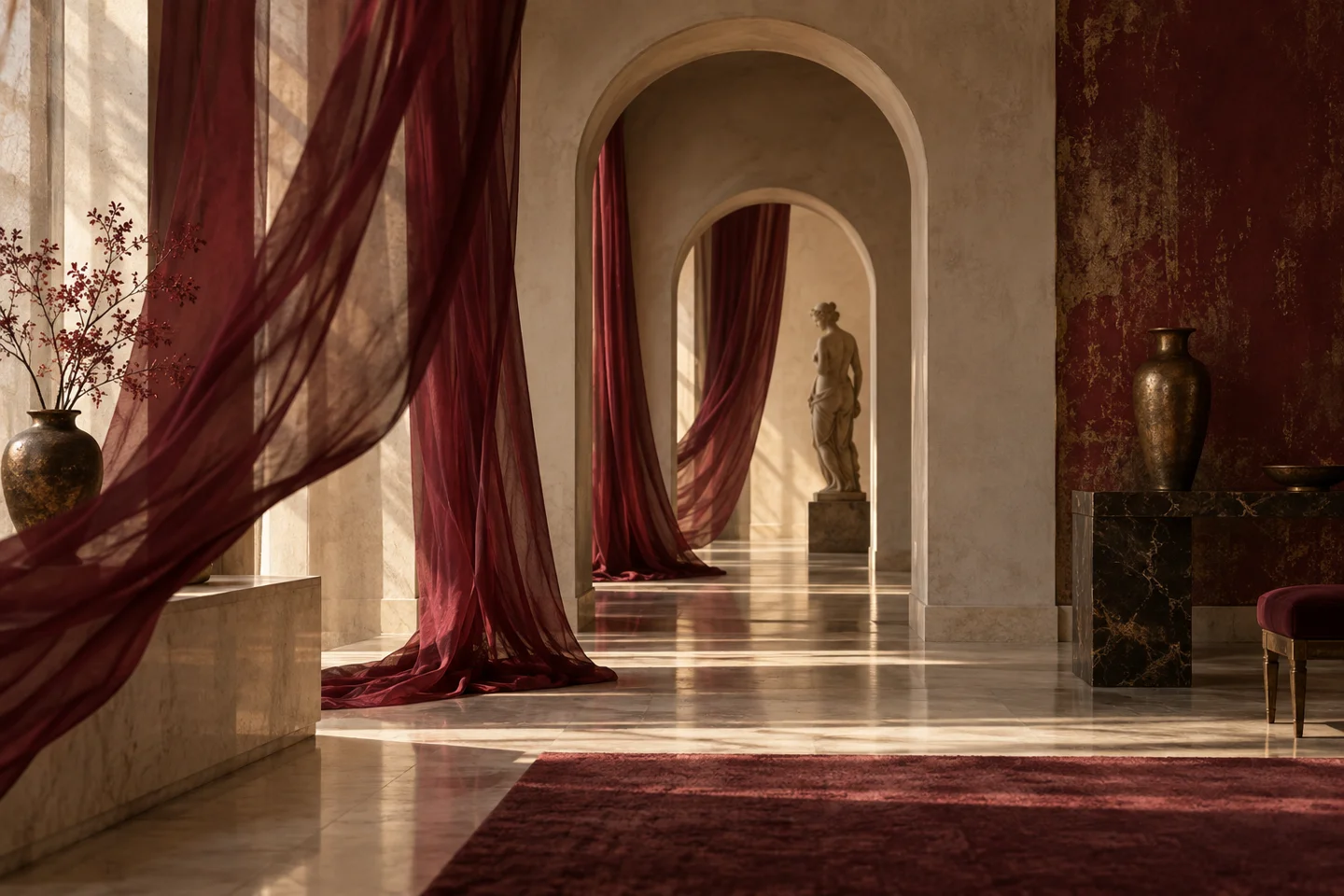
On our own website, parchment tones, burgundy, classical artwork and cinematic passages establish an atelier atmosphere. The visual language is part of our positioning: considered digital work with a strong artistic point of view.
Six kinds of motion, six different purposes
1. Cinematic opening films
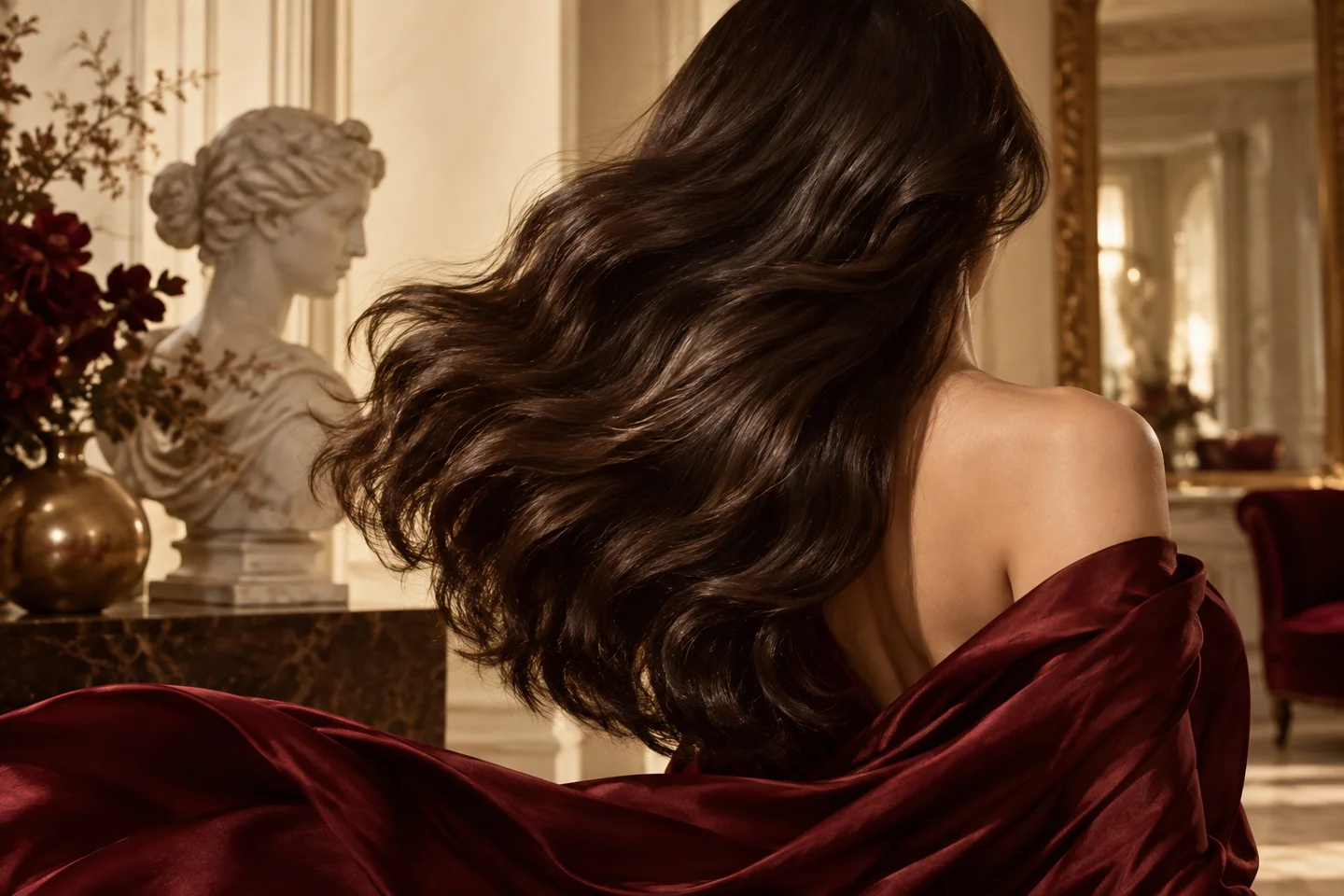
A short hero film introduces atmosphere immediately. Imagine the movement of freshly styled hair, the finishing touch on a plated dish or light travelling across a carefully designed interior. The footage should communicate the service before the visitor reads the supporting copy.
2. Scroll-driven storytelling
As a visitor scrolls, a visual sequence progresses with them. This can reveal a finished space, explore a collection or connect a process to its result. The visitor controls the pace; the story should never trap them in an extended animation before they can find a booking link.
3. Layered depth and parallax
Foreground and background elements move at different speeds, creating a sense of space. Used selectively, depth can make editorial photography feel more dimensional. It is most effective when the composition is already strong.
4. Typography in motion
A headline can arrive with measured timing, highlighting a central idea. The words still need to work on their own. Movement should reinforce emphasis, with text remaining readable and available to people who prefer reduced motion.
5. Transitions between chapters
Soft reveals, changes of scale and continuous imagery can lead from an introduction into services or proof. These transitions give a long page a deliberate rhythm instead of the feeling of a stack of unrelated panels.
6. Small interactive responses
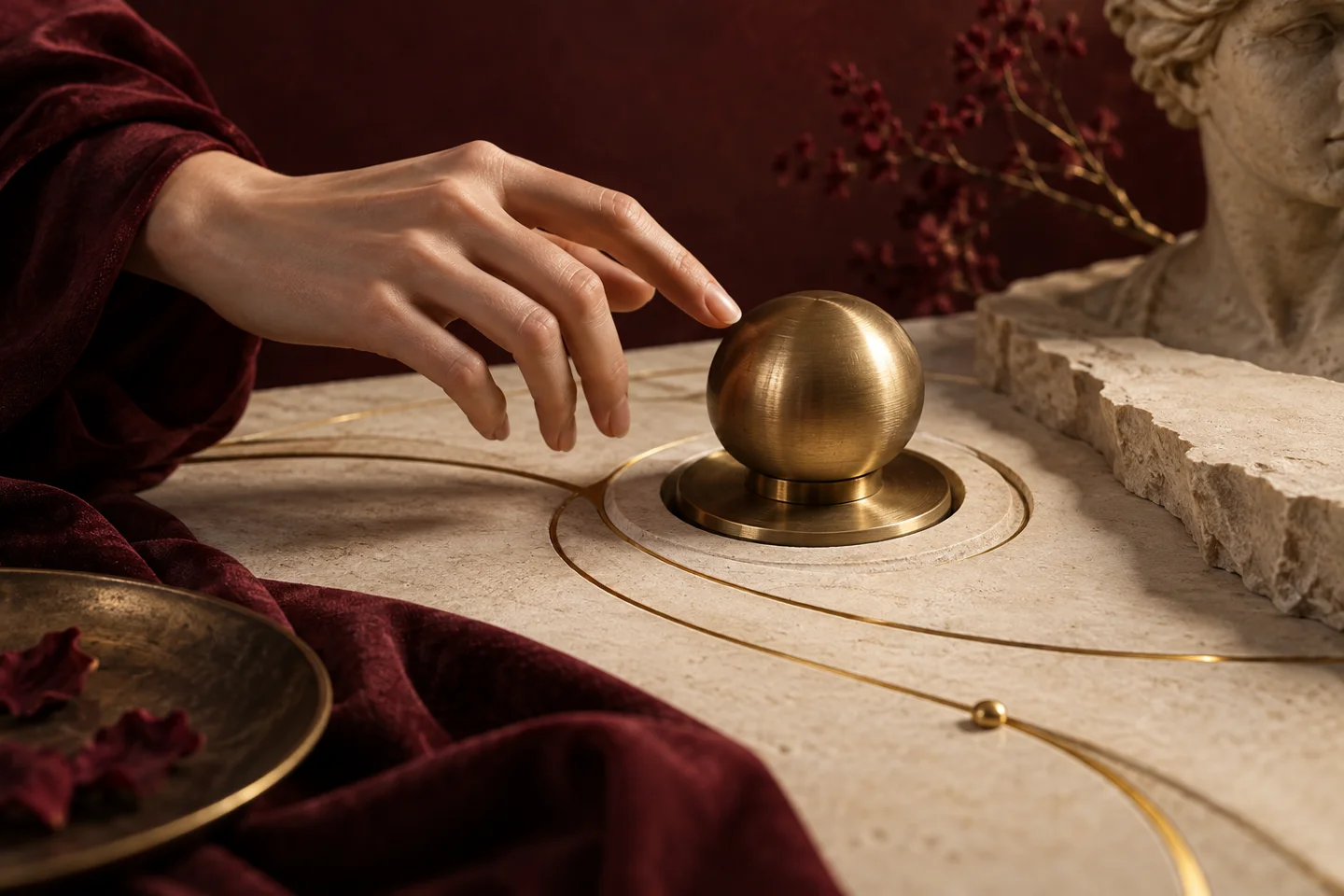
A button responds to focus, a selected service becomes clear, a gallery indicates what happens next. These small animations support confidence. Customers should always know what is interactive and whether their action has registered.
How that translates across different businesses
Consider these illustrative creative directions, rather than claims of measured client results.
- A salon or spa: a cinematic hair movement introduces the craft, an interior sequence establishes the setting, and an arched portrait leads into services. Prices and booking remain easy to reach.
- A restaurant: a full-width film follows the final preparation of a signature dish. The page then opens into the menu, the dining room and reservations. Atmosphere supports the decision to visit.
- A builder or interior studio: a scroll sequence moves from architectural detail to the completed space. Project descriptions explain the brief and scope, giving the imagery substance.
- A fashion business: fabric and silhouette move naturally before the visitor explores the collection. The motion expresses fit and texture that a still thumbnail cannot fully communicate.
The principle stays consistent: select a visual experience that helps a customer understand what makes this particular business worth choosing.
The difference between attention and distraction
Motion has a cost when it delays the answer a customer came for. A visitor looking for availability should not need to complete a cinematic tour. A phone user should not have to chase a moving button. An essential sentence should never disappear behind decorative imagery.
We judge an immersive experience by whether its strongest moments lead somewhere useful. The opening introduces the brand. Service content explains the offer. Real examples and credible proof reduce uncertainty. The call to action offers a clear next step.
Visual ambition also needs restraint. One well-directed scene can say more than several competing loops. Luxury often comes from what the design allows to remain still.
Beautiful on a phone. Comfortable to use.
A desktop composition is only part of the work. On a phone, the subject needs an intentional crop, headings need room, and controls must remain easy to use. A cinematic website should feel designed for the small screen rather than squeezed into it.
Performance and accessibility belong in the creative brief. Lightweight media, useful still-image fallbacks, visible keyboard focus and reduced-motion alternatives help preserve the experience across devices and preferences. The booking route and core content must remain available even when video cannot play.
Our standard is an experience with a strong identity and a practical foundation. A visual effect that damages readability or usability has not earned its place.
What we measure beyond the first impression
Engagement is useful only when we understand what it means. More time on a page could mean interest, or it could mean confusion. For a service business, the more meaningful questions concern qualified inquiries, booking activity and whether visitors can find the right information.
Motion is not a guaranteed conversion increase or a search ranking factor. Its commercial value depends on the audience, the offer and the execution. We look at the customer journey as a whole, pairing distinctive design with clear service pages and a straightforward inquiry process.
That is also why search visibility and the on-site experience belong together. Discovery brings someone to the door. The website gives them a reason to stay.
An experience that could only belong to you
At AI Web Motion, we approach immersive design as a brand decision. We define the mood, the moments worth showing and the action the customer needs to take. The result should feel specific to the business, from the opening frame to the final invitation.
If your business delivers a thoughtful, personal or premium experience, your website should carry that feeling before the first conversation. Explore our creative work and our process, then tell us what your customers should feel when they arrive.
YOUR NEXT CHAPTER
A website shaped around you.
Understand the scope and the process before you choose.
See how it works